Sep 28, 2026Services Overview
Worm Gearbox vs Helical Gearbox: What Is the Difference?
Worm and helical gearboxes differ in efficiency, reduction ratio, heat generation, load capacity, and cost. This guide compares their key features and helps you choose the right gearbox for you.
When selecting a gearbox for industrial equipment, two common options are worm gearboxes and helical gearboxes.
Both can reduce motor speed and increase output torque, but their internal transmission principles are different. As a result, they behave differently in terms of efficiency, heat generation, noise, service life, reduction ratio, and operating conditions.
So, which one should you choose?
The answer depends less on which gearbox is "better" and more on what your machine actually requires.
This article explains the key differences between worm and helical gearboxes and provides practical guidance for selecting the right solution.
1. What Is a Worm Gearbox?
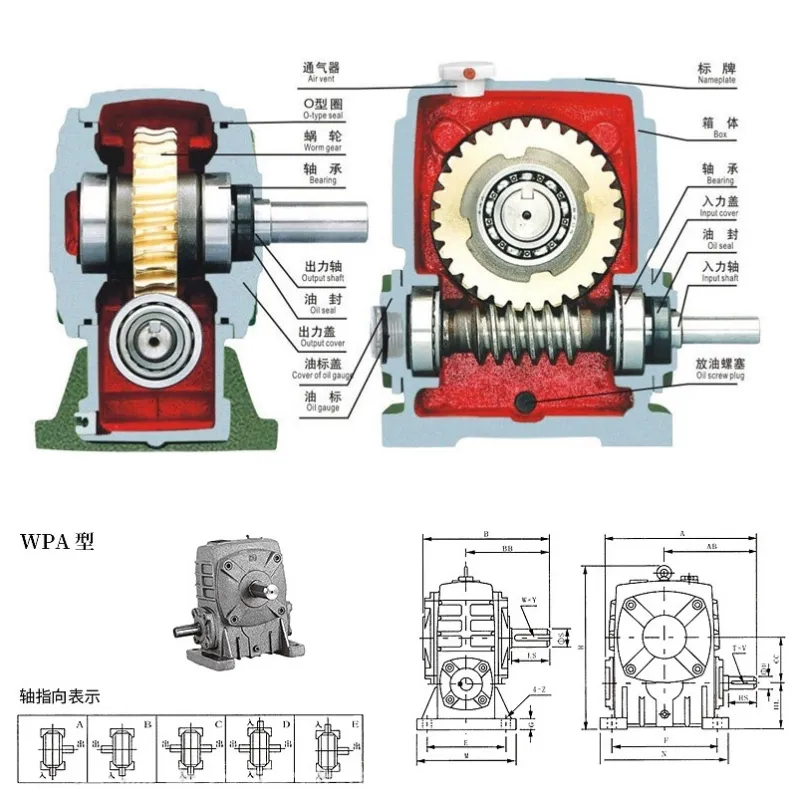
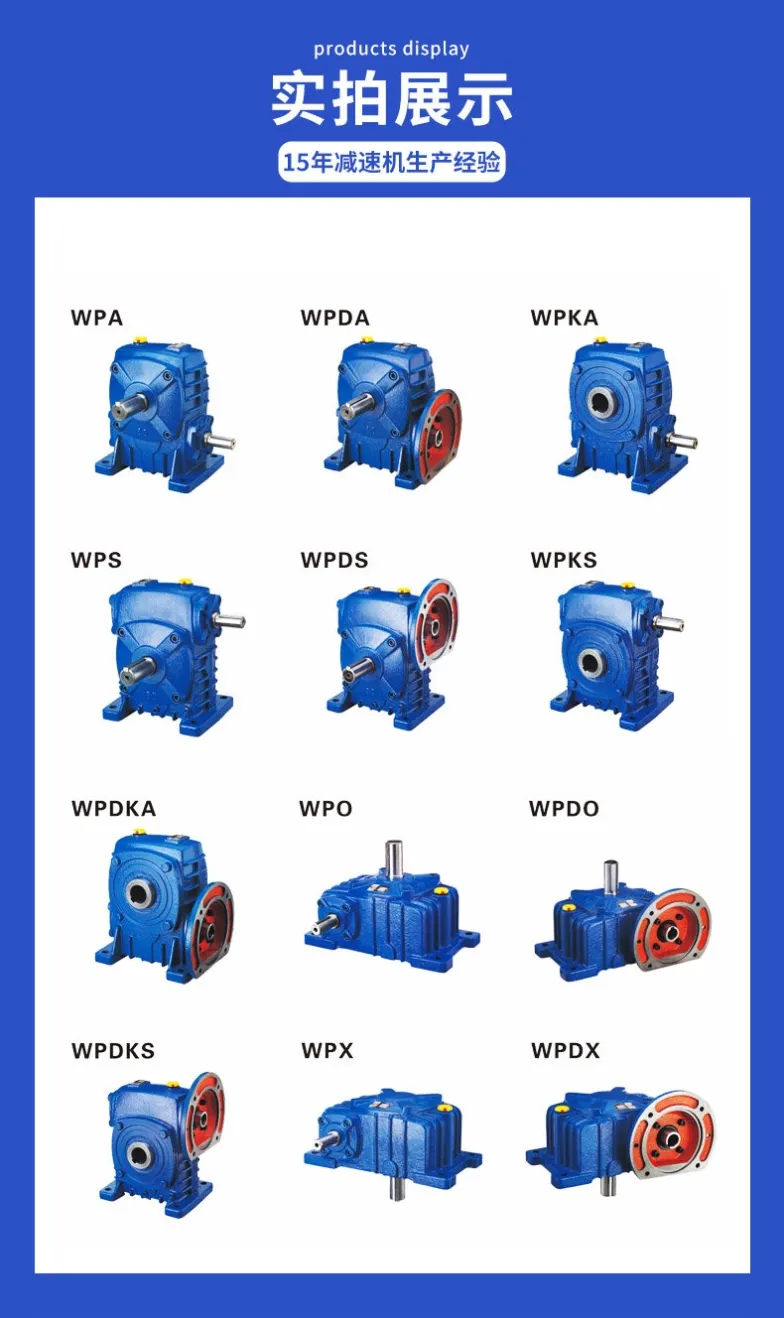
A worm gearbox uses a worm shaft and a worm wheel to transmit power.
The worm and worm wheel are typically arranged at a 90-degree angle. When the worm rotates, it drives the worm wheel, reducing the output speed and increasing the output torque.
One of the main characteristics of worm transmission is the sliding contact between the worm and worm wheel.
This design allows a relatively high reduction ratio to be achieved in a compact housing.
Typical advantages of worm gearboxes include:
- Compact construction
- 90-degree transmission
- High reduction ratios in a single stage
- Smooth operation
- Relatively low noise
- Competitive cost
- Resistance to backdriving under certain conditions
However, the sliding contact also creates friction, which can result in higher power losses and heat generation compared with many helical gear transmissions.
2. What Is a Helical Gearbox?
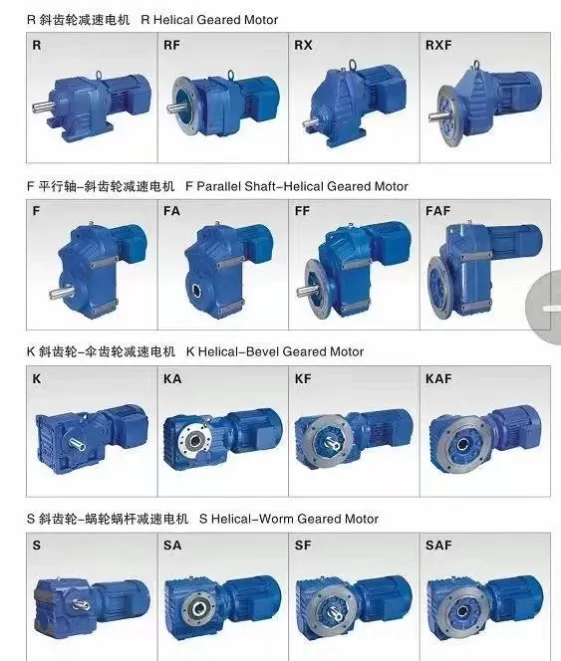
A helical gearbox uses helical gears to transmit power.
Unlike the sliding contact found in a worm transmission, helical gears primarily transmit power through rolling and meshing contact between gear teeth.
This generally allows helical gearboxes to achieve higher transmission efficiency.
Helical gearboxes are widely used in conveyors, industrial machinery, material-handling equipment, automation systems, and other applications requiring continuous and efficient power transmission.
Typical advantages include:
- High transmission efficiency
- Good load-carrying capacity
- Lower heat generation
- Long service life when properly selected
- Good suitability for continuous operation
- Efficient power transmission
However, a helical gearbox may require multiple gear stages when a very high reduction ratio is needed, which can result in a larger or more complex transmission system.
3. Worm Gearbox vs Helical Gearbox: Key Differences
The most important differences can be summarized as follows:
Feature | Worm Gearbox | Helical Gearbox |
|---|---|---|
Transmission principle | Worm and worm wheel | Helical gears |
Contact type | Significant sliding contact | Mainly meshing/rolling contact |
Efficiency | Generally lower | Generally higher |
Reduction ratio | High in a single stage | Often requires multiple stages for high ratios |
Heat generation | Relatively high | Relatively low |
Noise | Generally low | Generally low |
Continuous operation | Application dependent | Generally well suited |
Compactness | Compact for high ratios | Depends on ratio and design |
90° transmission | Common | Depends on gearbox configuration |
Backdriving resistance | Can be high under certain conditions | Usually easier to backdrive |
Cost | Often economical | Often higher |
Typical applications | Light/medium-duty machinery, compact equipment | Continuous-duty and higher-efficiency industrial equipment |
The actual performance of either gearbox depends on the specific design, ratio, load, lubrication, speed, and operating conditions.
4. Efficiency: One of the Biggest Differences
Efficiency is one of the most important differences between worm and helical gearboxes.
The worm and worm wheel in a worm gearbox experience significant sliding friction. Some of the input power is therefore converted into heat rather than being delivered to the output shaft.
A helical gearbox generally has lower friction losses and can therefore provide higher transmission efficiency.
This difference becomes particularly important when:
- The machine operates continuously
- Motor power is relatively high
- Energy consumption is important
- The gearbox operates at high loads
- The equipment runs for many hours per day
For example, if a gearbox operates 24 hours a day, even a relatively small efficiency difference can result in significant energy losses over a long operating period.
For this type of application, a helical gearbox may deserve closer consideration.
On the other hand, if the machine operates intermittently and the initial equipment cost and compact size are more important than maximum efficiency, a worm gearbox can still be a practical solution.
5. Reduction Ratio
Another major difference is the reduction ratio that can be achieved.
Worm gearboxes can provide relatively high reduction ratios in a single stage.
For example, a single worm gearbox may provide ratios such as:
10:1, 20:1, 30:1, 40:1 or 50:1
The exact available ratio depends on the gearbox series and manufacturer.
Helical gearboxes can also provide high reduction ratios, but higher ratios often require multiple gear stages.
For example, a two-stage or three-stage helical gearbox may be used when a large speed reduction is required.
Therefore:
If you need a high reduction ratio in a compact single-stage gearbox, a worm gearbox may be worth considering.
If transmission efficiency is more important and the machine can accommodate a multi-stage gearbox, a helical solution may be more suitable.
6. Heat Generation
Heat is closely related to transmission efficiency.
Because worm gearboxes have significant sliding friction, more energy can be converted into heat during operation.
This becomes increasingly important at:
- High input speeds
- High loads
- High reduction ratios
- Long operating periods
- High ambient temperatures
For continuous-duty applications, thermal capacity should therefore be considered during gearbox selection.
A gearbox may have sufficient mechanical torque capacity but still be unsuitable for a particular application if its thermal capacity is insufficient.
This is an important point that is sometimes overlooked during gearbox selection.
7. Torque and Load Capacity
Both worm and helical gearboxes can provide high output torque, but their load characteristics are different.
Helical gears generally provide efficient power transmission and good load-carrying capability, making helical gearboxes suitable for many continuous-duty industrial applications.
Worm gearboxes can also handle substantial loads, particularly in appropriately selected low- and medium-power applications.
However, the actual allowable output torque depends on much more than gearbox type.
It should be evaluated based on:
- Gearbox size
- Reduction ratio
- Motor power
- Input speed
- Duty cycle
- Service factor
- Load characteristics
- Ambient temperature
- Lubrication
- Required service life
Therefore, comparing two gearboxes based only on their nominal motor power can be misleading.
8. Noise and Smoothness
Both gearbox types can provide relatively smooth and quiet operation when properly designed and maintained.
Worm gearboxes are often valued for their smooth running characteristics because of the sliding interaction between the worm and worm wheel.
Helical gearboxes can also achieve low noise levels, particularly when precision gears, appropriate tooth profiles, and proper lubrication are used.
For applications where noise is important, the actual gearbox design and manufacturing quality should therefore be considered rather than assuming that one gearbox type will always be quieter.
9. Backdriving and Self-Locking
This is one area where worm gearboxes have a distinctive characteristic.
Depending on the worm geometry and operating conditions, some worm gearboxes can provide strong resistance to backdriving.
However, not every worm gearbox is self-locking.
Backdriving and self-locking depend on factors such as:
- Worm lead angle
- Reduction ratio
- Friction
- Lubrication
- Load
- Vibration
- Gearbox design
Helical gearboxes generally have less resistance to backdriving.
This can be either an advantage or a disadvantage depending on the application.
For example, a machine may require free backdriving in one application but resistance to backdriving in another.
For safety-critical lifting applications, however, the gearbox's backdriving resistance should not be treated as a substitute for a dedicated brake or mechanical safety system.
10. Service Life
The service life of a gearbox depends on many factors, so it is difficult to say that one type will always last longer.
For worm gearboxes, sliding friction can result in greater wear of the worm wheel, particularly under high loads, poor lubrication, or unfavorable operating conditions.
Helical gears generally have efficient tooth contact and can provide long service life when properly sized, lubricated, and operated within their rated conditions.
In both cases, service life can be strongly affected by:
- Correct sizing
- Load
- Shock loads
- Lubrication
- Operating temperature
- Installation accuracy
- Maintenance
- Duty cycle
A correctly selected gearbox operating within its design limits can often provide much longer service life than an undersized gearbox, regardless of gearbox type.
11. Which Gearbox Is More Suitable for Continuous Operation?
For continuous-duty applications, efficiency and thermal performance become particularly important.
A helical gearbox is often considered for applications such as:
- Continuous conveyors
- Material-handling systems
- Industrial production lines
- Heavy-duty machinery
- Equipment operating for many hours per day
Worm gearboxes can also be used for continuous operation, but their thermal capacity and efficiency should be carefully evaluated.
If a machine operates 24/7, it is important to consider not only the rated output torque but also the gearbox's thermal limitations.
12. Which Gearbox Is More Cost-Effective?
Initial purchase price is another consideration.
Worm gearboxes often have a relatively simple construction and can provide a cost-effective solution for many small- and medium-power applications.
Helical gearboxes may have a higher initial cost, particularly when multiple gear stages or more sophisticated designs are required.
However, purchase price is only one part of the total cost.
For equipment that operates continuously, the energy lost through gearbox inefficiency can become an important long-term operating cost.
Therefore, gearbox selection should consider both:
Initial Cost + Operating Cost
rather than looking only at the purchase price.
13. Worm Gearbox or Helical Gearbox: Which One Should You Choose?
There is no universal answer.
A worm gearbox may be worth considering when the application requires:
- A high reduction ratio in a compact design
- 90-degree transmission
- Smooth and relatively quiet operation
- Competitive initial cost
- Moderate power and load
- Intermittent or suitable continuous operation
- Resistance to backdriving under specific conditions
A helical gearbox may be more appropriate when the application requires:
- High transmission efficiency
- Continuous operation
- High power transmission
- Good thermal performance
- High load capacity
- Long operating periods
- Lower energy losses
The final decision should be based on the actual operating conditions rather than simply choosing one gearbox type over the other.
14. What Information Is Needed to Select the Right Gearbox?
If you are comparing a worm gearbox and a helical gearbox, the following information can help determine the appropriate solution:
- Motor power
- Motor speed
- Required output speed
- Required reduction ratio
- Required output torque
- Duty cycle
- Load characteristics
- Starting and stopping frequency
- Ambient temperature
- Mounting position
- Space limitations
- Required service life
For example, simply specifying:
"2.2 kW motor, 30:1 ratio"
may not be enough to select the correct gearbox.
A more complete specification would include:
2.2 kW / 1,500 rpm input / 50 rpm output / required output torque / 8 hours per day / conveyor application / frequent starts and stops
This provides a much clearer basis for gearbox selection.
Conclusion
Worm and helical gearboxes are both proven transmission solutions, but they are designed around different priorities.
A worm gearbox can be attractive when compact dimensions, high single-stage reduction ratios, 90-degree transmission, smooth operation, and competitive cost are important.
A helical gearbox can be advantageous when high efficiency, continuous operation, thermal performance, and efficient power transmission are higher priorities.
The key point is that gearbox selection should start with the application, not the gearbox name.
The right questions are not simply:
"Which gearbox is better?"
but rather:
What speed do I need? What torque do I need? How often will the machine run? How heavy is the load? Does efficiency matter? How much installation space is available?
Once these requirements are clear, it becomes much easier to determine whether a worm gearbox, helical gearbox, or another transmission solution is appropriate for the application.