Sep 21, 2026Services Overview
What Are the Advantages and Disadvantages of WP Worm Gear Reducers? How to Determine Whether They Are Suitable for Your Application
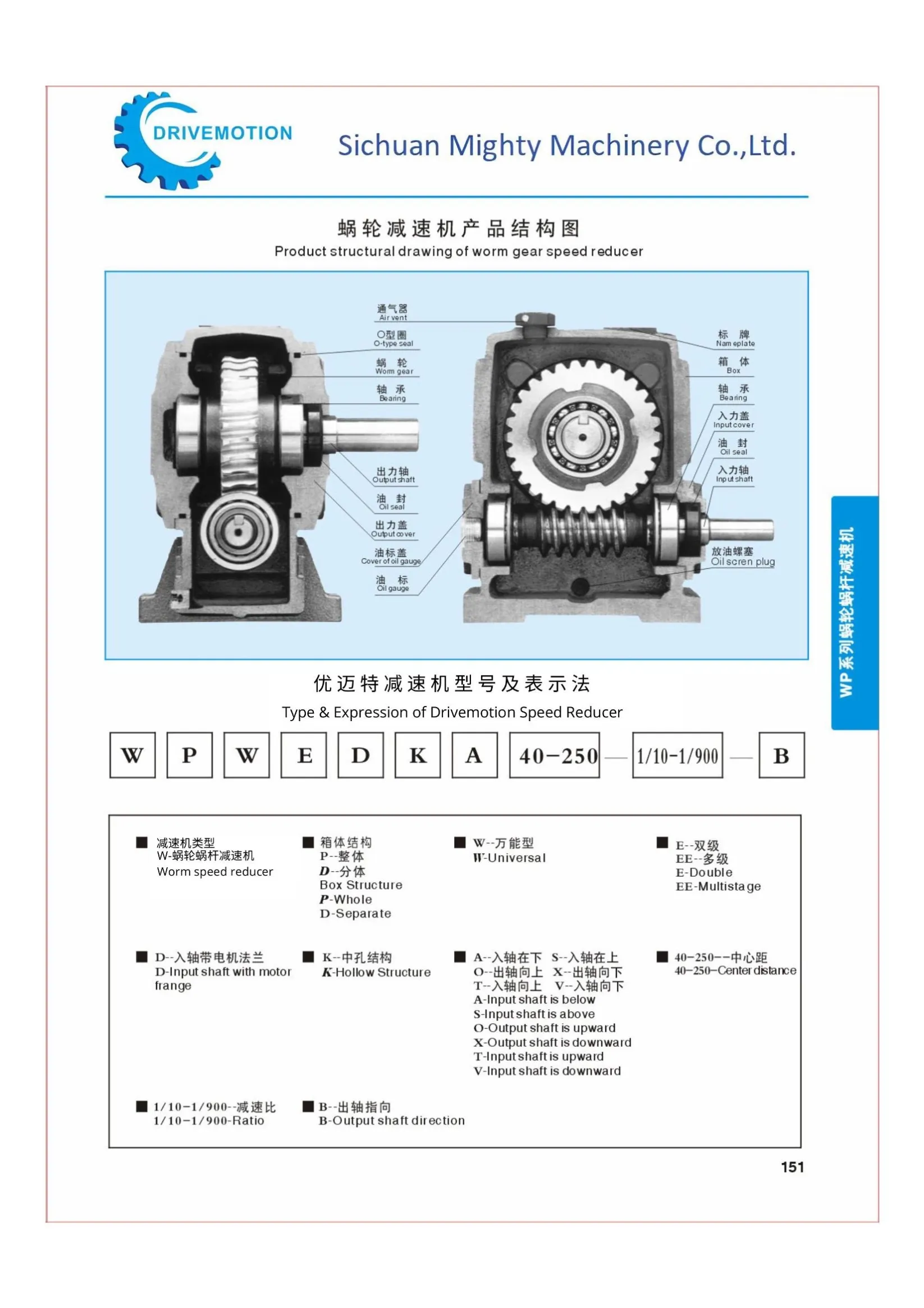
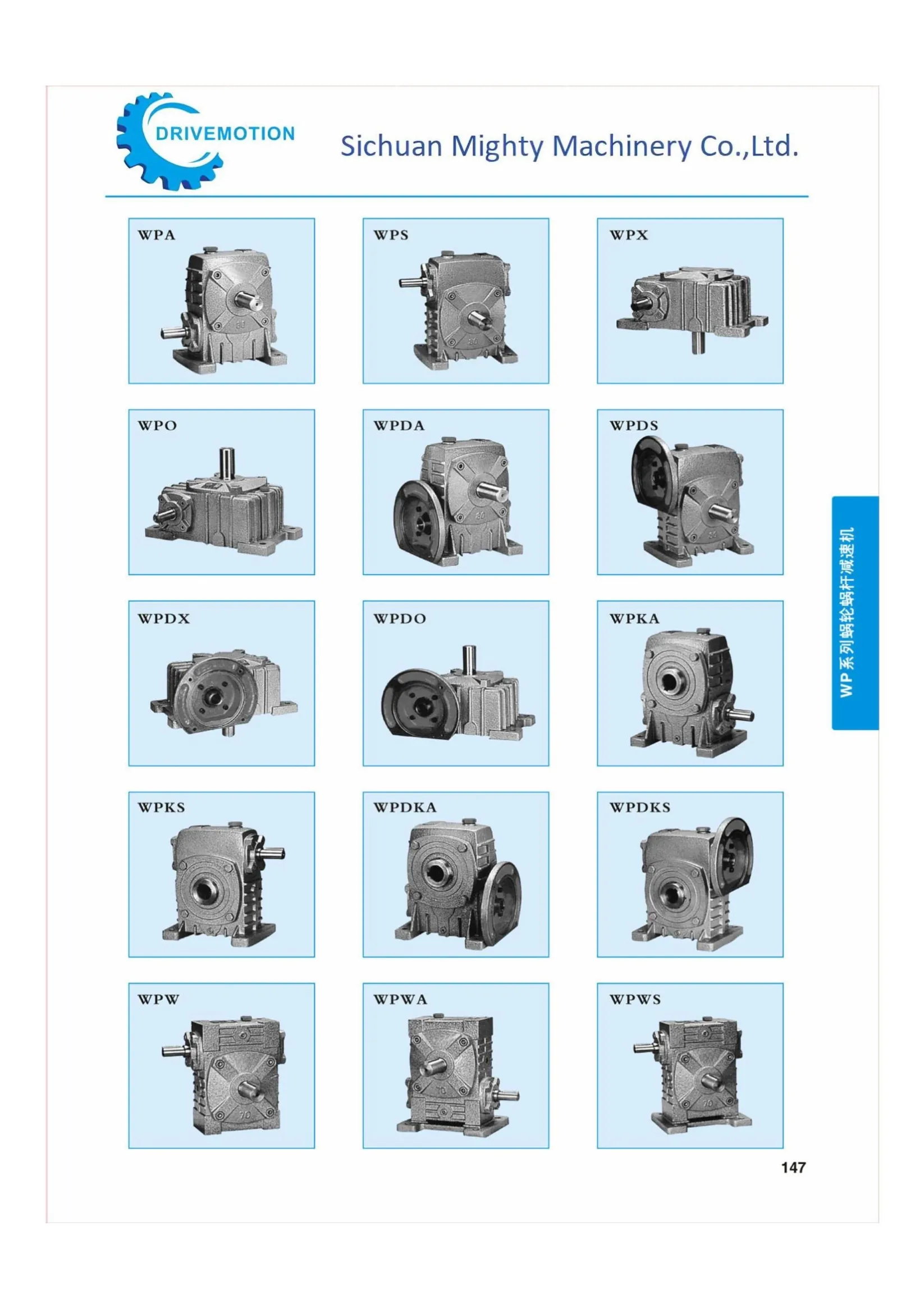
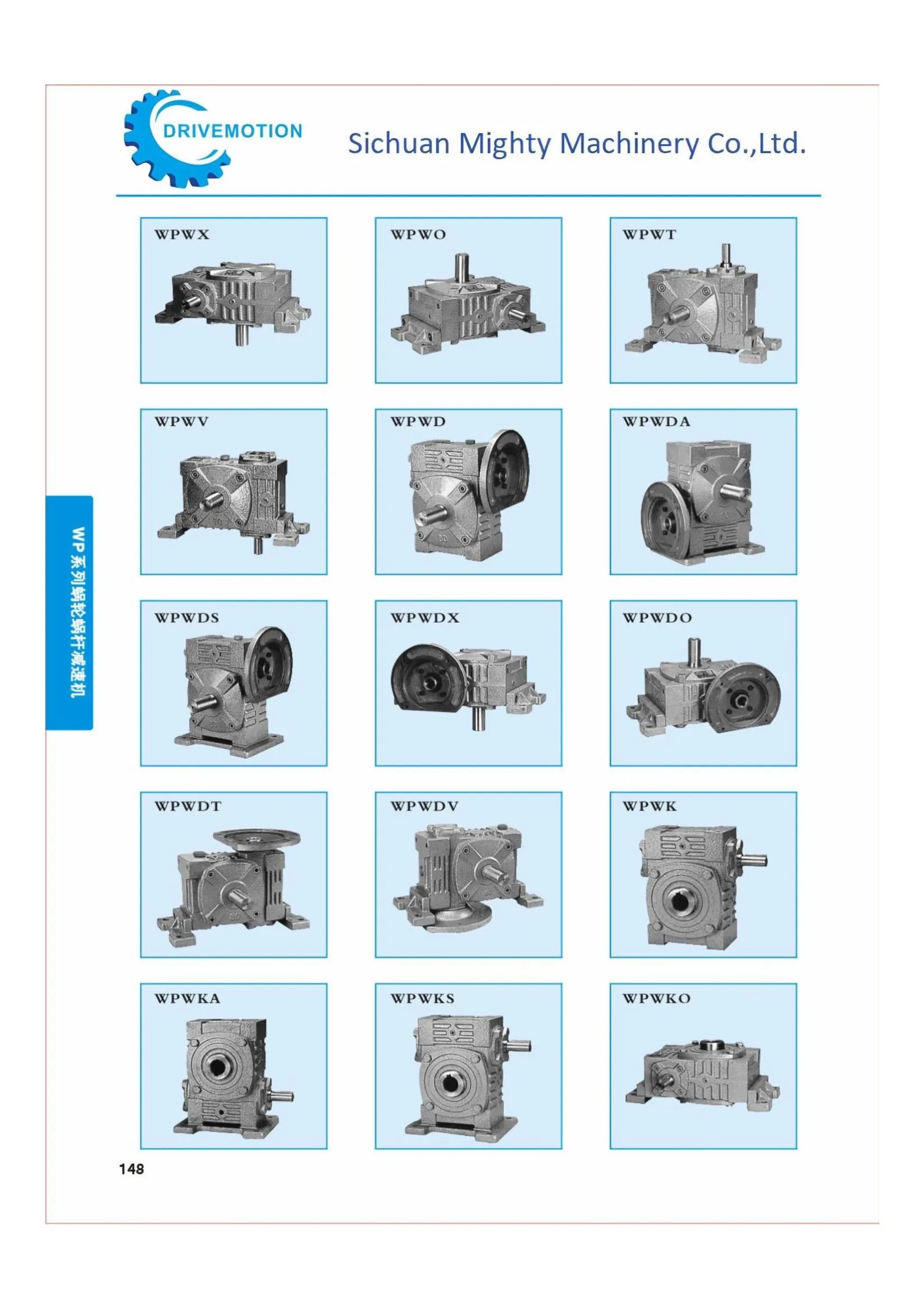
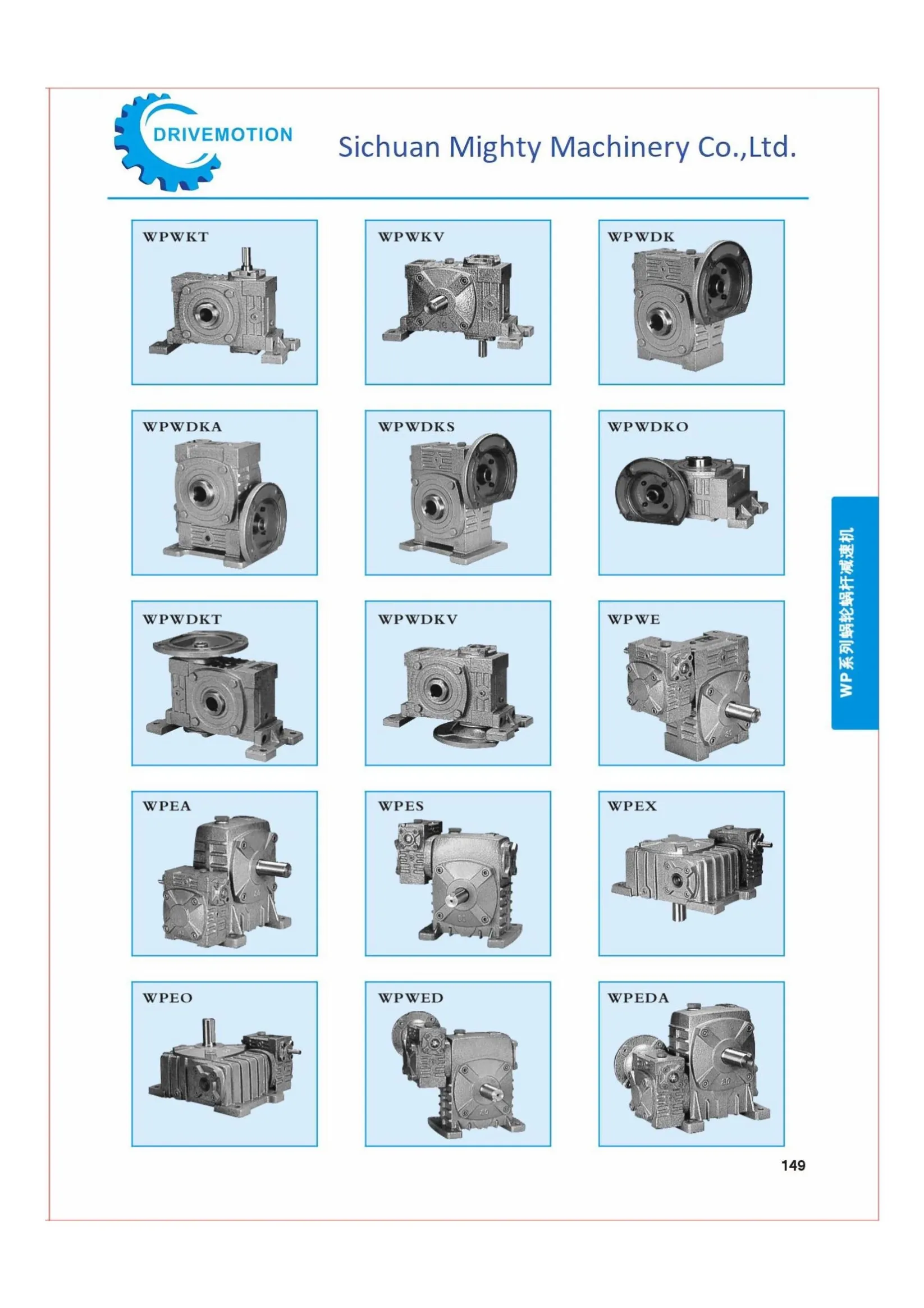
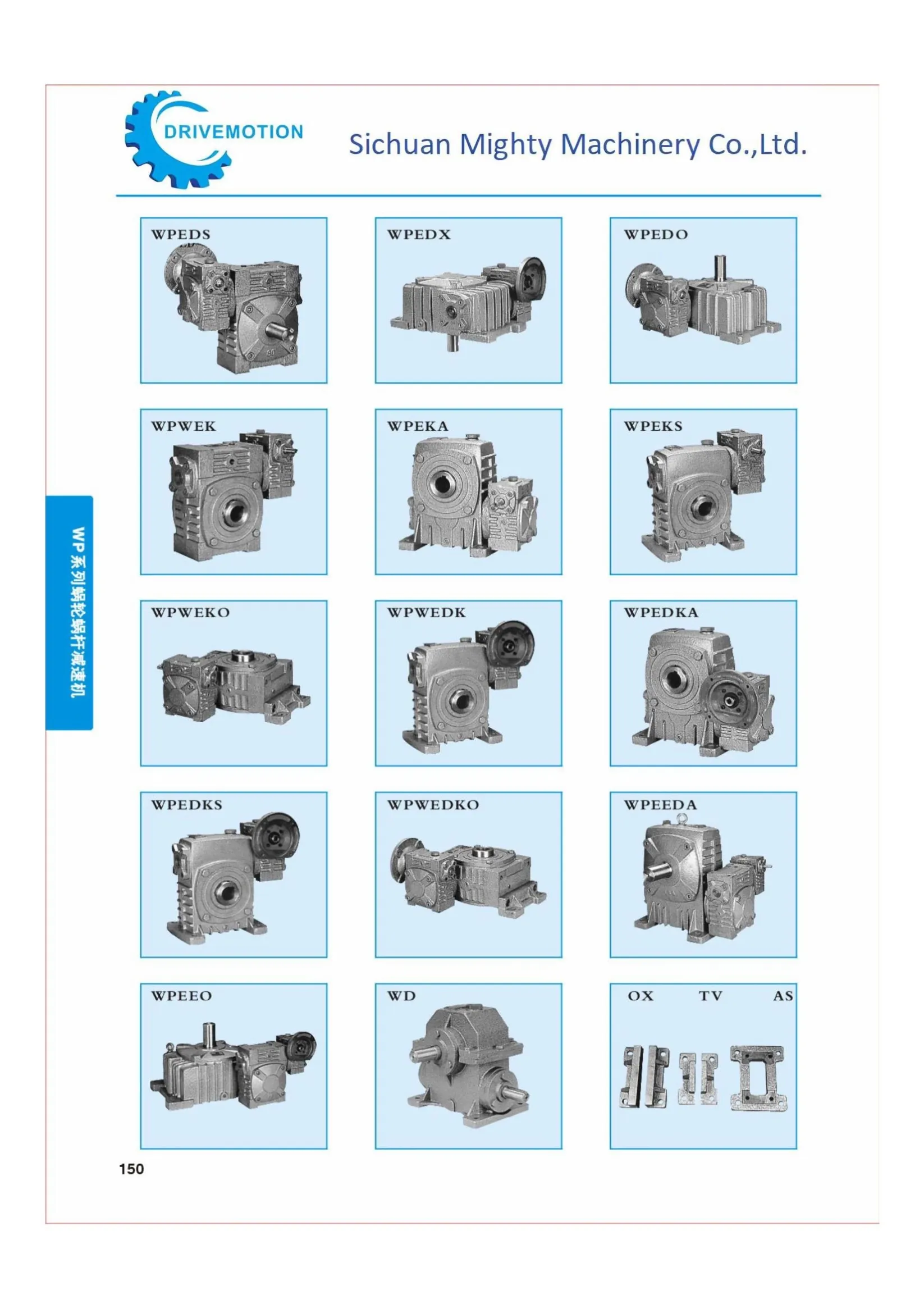
WP series worm gear reducers are a widely used transmission solution in industrial machinery. Compared with R series helical gear reducers, K series helical-bevel gear reducers, and other geared transmission solutions, WP reducers are known for their relatively compact design, right-angle transmission, and ability to achieve high reduction ratios in a single stage.
WP worm gear reducers are commonly used in conveyor systems, lifting equipment, packaging machinery, food-processing equipment, woodworking machinery, mixing equipment, and other general industrial applications.
However, a WP worm gear reducer is not necessarily the best solution for every application. Its design provides several practical advantages, but it also comes with certain limitations related to efficiency, heat generation, and continuous heavy-duty operation.
Understanding both the advantages and limitations of WP reducers is therefore important when selecting the right gearbox for your equipment.
1. What Is a WP Worm Gear Reducer?
A WP reducer is a type of worm gear transmission.
Its main components typically include a worm shaft, worm wheel, bearings, housing, and output shaft. The worm and worm wheel are normally arranged at a 90-degree angle. The worm drives the worm wheel, reducing the output speed while increasing the available output torque.
WP series reducers are available in various configurations, such as WPA, WPS, WPDA, WPDS, WPO, and WPX. Different configurations are designed for different input, output, and mounting requirements.
Depending on the specific design and manufacturer, single-stage WP worm gear reducers can commonly provide reduction ratios in the range of approximately 10:1 to 60:1.
One of the key characteristics of this design is that it can provide a relatively high reduction ratio while maintaining a compact transmission structure.
2.1 Compact Design
One of the main advantages of WP reducers is their relatively compact construction.
The worm and worm wheel are arranged at a 90-degree angle, which can be useful when installation space is limited or when the input and output shafts need to be positioned perpendicular to each other.
Compared with some transmission systems that require multiple gear stages to achieve a high reduction ratio, a worm gear reducer can achieve substantial speed reduction within a relatively compact housing.
For equipment designers, this can provide several benefits:
- Reduced installation space
- Convenient 90-degree power transmission
- Relatively simple construction
- Flexible mounting options
For these reasons, WP reducers remain a practical solution for many compact mechanical systems.
2.2 High Reduction Ratios in a Single Stage
Another important advantage of WP worm gear reducers is their ability to provide relatively high reduction ratios in a single stage.
Depending on the specific model and design, common WP reducers can cover ratios from approximately 10:1 to 60:1.
For example, if a 1,500 rpm motor is connected to a 30:1 reducer, the theoretical output speed would be:
1,500 ÷ 30 = 50 rpm
When equipment requires a relatively low output speed while maintaining a simple transmission structure, a WP worm gear reducer can be an economical and practical option.
2.3 Smooth Operation and Relatively Low Noise
The contact between the worm and worm wheel involves sliding motion, which can provide a certain degree of damping and vibration reduction during operation.
As a result, WP worm gear reducers can provide relatively smooth operation in low-speed and moderate-load applications.
This makes them suitable for various types of machinery, including packaging equipment, conveyor systems, food-processing machinery, and general-purpose industrial equipment.
2.4 Potential Resistance to Backdriving
Another characteristic often associated with worm gear reducers is their resistance to backdriving.
However, it is important to clarify that not every WP worm gear reducer is automatically self-locking.
The ability of a worm gear reducer to resist backdriving depends on factors such as the worm lead angle, friction conditions, lubrication, load, vibration, and the specific gearbox design.
Under certain operating conditions, a smaller lead angle and higher reduction ratio can improve the gearbox's resistance to backdriving.
This characteristic can be useful in certain lifting, adjustment, valve, and positioning applications.
However, where load holding is safety-critical, the self-locking characteristics of a worm gearbox should not be treated as a substitute for a dedicated braking or mechanical locking system.
For applications involving personnel safety or suspended loads, an independent brake or mechanical safety device may be required.
2.5 Competitive Cost
WP worm gear reducers have a relatively simple and mature design, and their manufacturing processes are well established.
As a result, they can often provide a competitive solution for general industrial applications involving small and medium power levels.
For equipment manufacturers, if the application does not require extremely high transmission efficiency but places greater emphasis on cost, compact dimensions, and a relatively high reduction ratio, a WP reducer can offer a good balance between performance and cost.
3. What Are the Disadvantages of WP Worm Gear Reducers?
While WP reducers offer several advantages, their limitations should also be considered.
In many cases, their main disadvantages are directly related to one of their defining characteristics: sliding friction between the worm and worm wheel.
3.1 Lower Transmission Efficiency Than Many Helical Gear Reducers
Worm gear transmission involves considerable sliding friction. Therefore, under comparable operating conditions, its mechanical efficiency is generally lower than that of many helical, bevel, or planetary gear transmission systems.
Actual efficiency is not a fixed value. It can be affected by factors such as:
- Reduction ratio
- Worm lead angle
- Lubrication
- Load
- Input speed
- Operating temperature
- Running-in condition
This means that efficiency becomes increasingly important when the reducer operates continuously or at high reduction ratios.
If equipment operates 24 hours a day and energy consumption is an important consideration, it is worth comparing a WP worm gear reducer with higher-efficiency solutions such as R, K, or other helical gear reducers.
3.2 Heat Generation During Continuous Operation
Because of the sliding friction between the worm and worm wheel, part of the input power is converted into heat.
Therefore, under continuous operation, high loads, or high input speeds, operating temperature can become an important factor in gearbox selection.
This means that gearbox selection should not be based only on one question:
Is the output torque sufficient?
Another important question is:
Can the gearbox dissipate the generated heat under the actual operating conditions?
For equipment operating 24 hours a day, both mechanical load capacity and thermal capacity should be carefully evaluated.
3.3 Not Ideal for Every Heavy-Duty Continuous Application
WP worm gear reducers are well suited to many small and medium-duty machines. However, other gearbox solutions may be more appropriate when the application involves:
- 24/7 continuous operation
- High loads
- Frequent starts and stops
- High motor power
- Strict energy-efficiency requirements
- High ambient temperatures
For example, in certain continuous conveyor systems, heavy-duty conveying equipment, mining machinery, and other high-load applications, R series or K series geared reducers may be worth comparing as alternative solutions.
The final selection should be based on actual output torque, duty cycle, service factor, input speed, ambient temperature, mounting position, and other operating conditions rather than simply choosing a gearbox type.
4. What Applications Are WP Worm Gear Reducers Suitable For?
Considering their overall characteristics, WP worm gear reducers can be suitable for applications such as:
Conveyor Equipment
Examples include:
- Belt conveyors
- Screw conveyors
- Small material-handling systems
- Packaging conveyor lines
Packaging Machinery
The compact design and flexible mounting options of WP reducers make them suitable for certain packaging and automation equipment.
Food-Processing and Light Industrial Machinery
For moderate-load applications, intermittent operation, or equipment where extremely high transmission efficiency is not the primary requirement, WP reducers can be a practical choice.
Woodworking Machinery
Some woodworking equipment requires low output speeds and relatively high reduction ratios, making worm gear reducers suitable for certain applications.
Adjustment and Lifting Mechanisms
For certain non-safety-critical lifting or adjustment mechanisms, the resistance to backdriving offered by a worm gear transmission can provide an additional practical advantage.
5. When Should You Consider an Alternative to a WP Reducer?
Certain applications require a more detailed comparison before selecting a WP worm gear reducer.
1. Long-term 24/7 Operation
Efficiency and heat generation may become more important than the initial purchase price.
2. High Power or Heavy Loads
Worm wheel wear, thermal capacity, and long-term service life should be carefully evaluated.
3. High Energy-Efficiency Requirements
If a machine operates for long periods every year, even a relatively small difference in transmission efficiency can have a noticeable impact on long-term energy consumption.
4. High Input Speeds
The actual input speed should be evaluated together with the gearbox's thermal capacity and operating conditions rather than selecting a reducer based only on the motor's rated speed.
5. Applications Requiring Reliable Load Holding
The self-locking or anti-backdriving characteristics of a worm gearbox should not automatically be considered equivalent to a safety brake.
For lifting equipment or other applications where load holding is safety-critical, an independent braking or mechanical locking system should be considered.
6. How Should You Select a WP Worm Gear Reducer?
When selecting a WP worm gear reducer, it is recommended to confirm at least the following parameters.
6.1 Motor Power
For example:
0.37 kW / 0.75 kW / 1.5 kW / 2.2 kW / 4 kW
However, motor power alone is not enough. The actual load and operating conditions must also be considered.
6.2 Input Speed
For example:
750 rpm / 1,000 rpm / 1,500 rpm
Different input speeds can affect gearbox efficiency, temperature rise, and service life.
6.3 Reduction Ratio
For example:
10:1 / 20:1 / 30:1 / 40:1 / 50:1
The required ratio should be determined according to the target output speed.
6.4 Output Torque
Output torque is one of the most important selection parameters.
Instead of simply saying:
"I need a 1.5 kW gearbox."
A more accurate specification should include:
Motor power + input speed + output speed + output torque + duty cycle + load characteristics
The reason is simple:
The same motor power and the same reduction ratio do not necessarily mean the same actual output torque, thermal capacity, or service life across different gearbox designs.
6.5 Duty Cycle
It is also important to determine how the machine will operate:
- Intermittent operation
- Several cycles per hour
- 8 hours per day
- 16 hours per day
- 24-hour continuous operation
Different duty cycles can result in different gearbox selection requirements.
7. Are WP Worm Gear Reducers a Good Choice?
There is no simple "yes" or "no" answer.
A more accurate conclusion is that:
WP worm gear reducers are a mature and practical transmission solution, but they are best suited to specific operating conditions.
Their main advantages include:
- Compact construction
- 90-degree transmission
- Relatively high single-stage reduction ratios
- Smooth operation
- Competitive cost
- Good resistance to backdriving under certain conditions
Their main limitations include:
- Lower transmission efficiency compared with many geared alternatives
- Heat generation
- Potential limitations in high-load, continuous-duty applications
Therefore, the right selection should not simply be based on whether a WP reducer is "better" than an R or K series reducer.
Instead, the gearbox should be selected according to the actual operating conditions of the machine.
For small- and medium-power applications, low-speed equipment, intermittent operation, and machines where compact dimensions and cost are important, a WP worm gear reducer can be a practical solution.
For high-load, continuous-duty applications where energy efficiency is a major consideration, it may be worthwhile to compare helical, bevel, or other high-efficiency gearbox solutions.
The right gearbox is not necessarily the most expensive or the most efficient one. It is the gearbox whose design matches the actual requirements of the machine.
If you are selecting a WP worm gear reducer and are unsure which model is suitable, you can provide the motor power, input speed, required output speed or reduction ratio, output torque, mounting position, and daily operating hours. These parameters can be used to determine a suitable WP gearbox configuration for your application.